
Distal Acupuncture for the Hips
Distal Acupuncture for the Hips
This course includes
The instructors
Overview
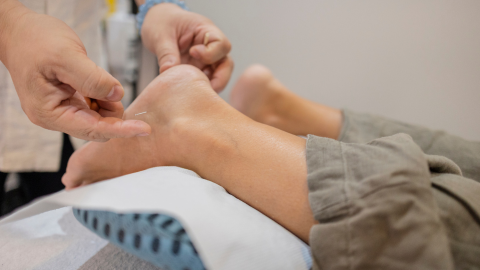
This Embodia course explores the clinical application of distal acupuncture for the management of hip pain, integrating Traditional Chinese Medicine (TCM) meridian theory, Tung’s acupuncture system, and modern myofascial anatomy.
Clinicians will learn how to effectively select distal acupuncture points across key meridians—including Gall Bladder (GB), Urinary Bladder (UB), Liver (LV), Spleen (SP), and San Jiao (SJ)—to influence hip and lumbar conditions without relying solely on local needling. The course also introduces Tung’s acupuncture points, such as the Shoulder Triplets and SBAL (Superficial Back Arm Line), offering innovative distal strategies grounded in both energetic and fascial connections.
With a strong emphasis on clinical reasoning, this course bridges traditional frameworks with contemporary rehabilitation principles, including movement integration and individualized treatment planning.
Learning Objectives
By the end of this course, participants will be able to:
- Identify key distal acupuncture points used in the treatment of hip and groin pain
- Apply TCM meridian theory to guide point selection for hip conditions
- Integrate Tung’s acupuncture system into clinical practice for distal needling approaches
- Utilize myofascial line concepts (e.g., Deep Front Line, SBAL) to inform treatment strategies
- Differentiate when to use distal vs. local needling based on clinical presentation
- Implement safe and effective treatment protocols using 3–5 needles with movement integration
- Adapt acupuncture strategies for acute, chronic, and post-surgical hip conditions
Audience
This course is designed for regulated healthcare professionals, including:
- Physiotherapists
- Chiropractors
- Acupuncturists
- Osteopaths
- Other clinicians trained in acupuncture or dry needling
It is particularly valuable for practitioners seeking to expand beyond local needling and incorporate distal, systems-based approaches into their treatment of hip and lumbar conditions.
Why This Course Matters
Hip pain can be complex, multifactorial, and often resistant to purely local treatment approaches. This course provides clinicians with a broader, more adaptable toolkit by emphasizing distal needling strategies that are:
- Clinically effective: Evidence supports acupuncture’s role in reducing pain, including post-operative hip pain
- Safer in many cases: Distal needling minimizes risk in acute injuries and post-surgical scenarios
- Functionally integrated: Combining needling with movement enhances neuromuscular outcomes
- Rooted in both tradition and science: Merging TCM meridians with myofascial anatomy improves clinical reasoning
By expanding beyond the site of pain, clinicians can treat more effectively, especially in cases where local needling is contraindicated or insufficient.
The instructors


The Acupuncture Division of the Canadian Physiotherapy Association supports physiotherapists and physiotherapist assistants in advancing the use of acupuncture as an established core competency in physiotherapy clinical practice.
Vision
To promote acupuncture and encourage an actively engaged membership who are committed to lifelong learning and excellence in practice in order to promote health and well-being among their patients.
Mission
To provide leadership and direction to physiotherapists and physiotherapy assistants who are members of the Acupuncture Division of the Canadian Physiotherapy Association in advancing the utilization of acupuncture in clinical practice by promoting excellence in direct care, education and research.
Material included in this course
-
Distal Acupuncture for the Hips
-
Welcome and Slides
-
Common Points for Hip Pain
-
Clinical Gems
-
Research Review
-
A System for Hip Pain
-
Questions
-
Summary and Key Insights
-
Feedback